
If dark patches from years of sun exposure keep peeking through your makeup, finding the best foundation to cover sun spots can feel like a personal mission. The good news is that a handful of formulas truly deliver soft, natural-looking coverage without feeling heavy or cakey.
In this guide, we break down what causes sun spots, what to look for in a foundation, and our top five picks, ranked from best to least recommended. We also cover prep, application tips, and the mistakes that make dark spots more obvious instead of less.
Every product below is a real, widely available formula. We researched ingredients, coverage claims, and genuine user feedback so you can pick the right match for your skin, without the guesswork.
What Causes Sun Spots?
Sun spots, also called age spots or solar lentigines, are flat brown or tan patches that form when skin produces extra melanin. Melanin is the pigment that gives skin its color. Ultraviolet (UV) light from the sun triggers your skin to make more of it as a defense mechanism.
Over time, repeated UV exposure causes melanin to clump in small areas instead of spreading evenly. This clumping shows up as spots, usually on your face, hands, shoulders, and chest. These are the areas that see the most sun over a lifetime.
Sun spots often become more noticeable with age, because skin has had more years of cumulative exposure. However, genetics, hormones, and skin injuries also play a role. For example, melasma is a related type of hyperpigmentation linked to hormones, while post-inflammatory hyperpigmentation can follow acne or other skin trauma.
None of these conditions are harmful on their own. Still, many people prefer to even out their skin tone with makeup, which is exactly where the right foundation comes in.
What to Look for in the Best Foundation to Cover Sun Spots
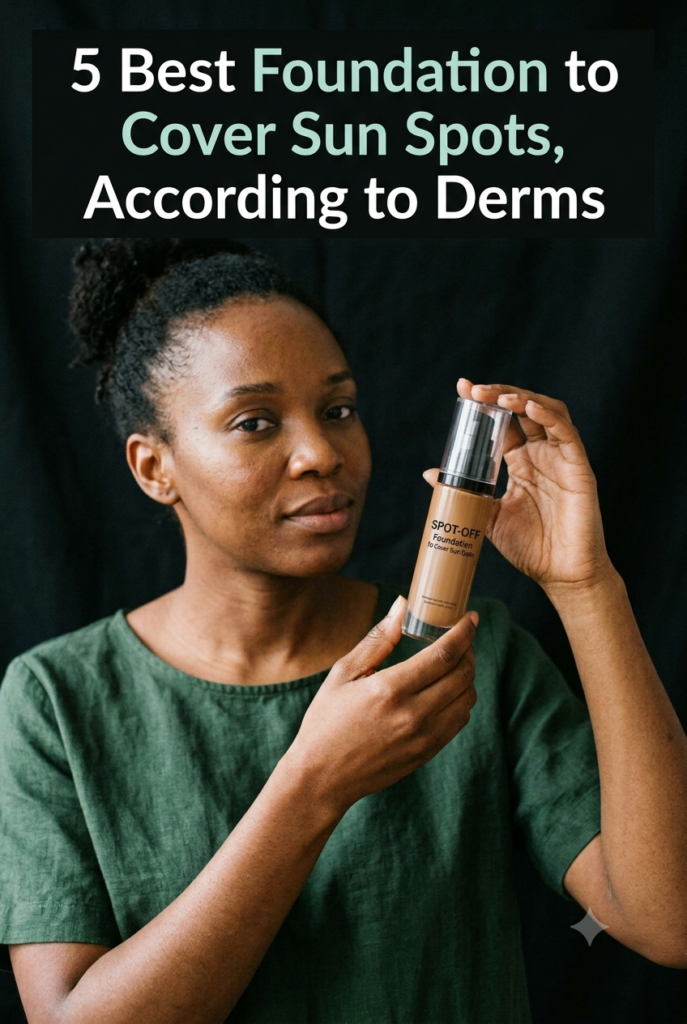
Not every foundation is built to handle discoloration. Therefore, a few features matter more than others when your main goal is coverage.
- Buildable pigment. You want a formula you can layer over stubborn spots without it turning cakey.
- Broad-spectrum SPF. Sun protection helps guard against further discoloration, though it should never replace a dedicated sunscreen (more on that below).
- The right undertone. A warm, slightly yellow-based shade often neutralizes brown spots better than a cool or pink-based one.
- A hydrating formula. Sun-damaged skin is often drier, so a hydrating base helps foundation sit smoothly instead of clinging to dry patches.
- Long wear. A formula that fades or breaks down quickly will let spots peek through by midday.
Which Foundation Is Best for Your Skin Type?
Your skin type matters just as much as your spots. Dry or mature skin generally looks best in hydrating, satin, or dewy formulas, because matte finishes can cling to flaky texture. Oily or combination skin, meanwhile, often does better with an oil-free or semi-matte formula that will not slide off by the afternoon.
Sensitive or post-procedure skin benefits from fragrance-free, mineral-based formulas. In addition, if you are still unsure, a buildable medium-to-full coverage foundation is the safest starting point for almost any skin type.
Full Coverage vs. Buildable Coverage: Which Is Better?
Full coverage foundations apply heavy pigment in a single layer, so they hide spots quickly. Buildable coverage foundations, on the other hand, start sheer and let you add more product only where you need it.
For most people dealing with sun spots, buildable coverage is the better everyday choice. It gives you control, and it is much harder to overapply by accident. Full coverage still has its place, though, especially for deep or widespread discoloration that lighter formulas simply cannot hide.
Should You Use a Full-Coverage Foundation If You Have Hyperpigmentation?
Not always. If your spots are mild or few, a full-coverage formula can look heavier than necessary and may draw attention to texture elsewhere on your face. However, if your hyperpigmentation is dark, widespread, or resistant to lighter products, full coverage is a reasonable choice, especially when applied in thin layers rather than one thick one.
Is Matte or Dewy Foundation Better for Sun-Damaged Skin?
Neither extreme is ideal. A completely matte finish can sit in fine lines and emphasize dryness, while a very dewy finish can highlight texture and uneven patches. A satin or semi-matte finish usually strikes the best balance for sun-damaged skin, because it softens the look of spots without exaggerating texture.
Best Foundations to Cover Sun Spots (Top Picks)
Below are our top five picks for the best foundation to cover sun spots, ranked from best overall to our final recommendation. Each one takes a different approach, so your ideal pick depends on your skin type, coverage needs, and budget.
1. IT Cosmetics CC+ Cream (Your Skin But Better) SPF 50+ — Best Overall
You reach for this one when you want a single product to handle color correction, hydration, and sun protection at once. A pump or two, warmed between your fingers, melts into skin easily. It settles into a soft, natural veil across your cheeks, forehead, and hairline, right where sun spots tend to show up most.
Key ingredients: This cream combines hyaluronic acid, niacinamide, peptides, collagen, and vitamin E with a broad-spectrum SPF 50+ sunscreen that blends mineral filters (titanium dioxide and zinc oxide) with a small amount of chemical filters.
Effectiveness: One layer typically covers freckles and mild-to-moderate hyperpigmentation smoothly. You can build a second layer over stubborn spots without streaking, though very deep discoloration may still need a touch of concealer on top.
Ease of use: Application is simple with a brush, sponge, or fingers. Oily skin types may notice extra shine by midafternoon, so a light dusting of setting powder helps it hold up.
Ideal for: Normal, dry, combination, and mature skin, plus anyone who wants to simplify their routine by combining moisturizer, sunscreen, and foundation into one step.
Pros:
- High, broad-spectrum SPF 50+
- Hydrating formula with skin-care ingredients
- Wide shade range
- Doubles as a moisturizer and light concealer
Cons:
- Can look shiny on oily skin without powder
- Mild scent that some users notice
- Very dark or textured spots may need extra concealer
Value: Pricing runs roughly $30 to $52 depending on size. That is reasonable, since it replaces a moisturizer, sunscreen, and foundation in one step.
Real-world results: Long-time users consistently mention that their redness and dark spots even out within seconds of blending, and that their skin still looks smooth and natural by the afternoon, not flat or mask-like.
Verdict: For most people, this is the best foundation to cover sun spots overall. It pairs meaningful sun protection with genuine skin-care benefits, without sacrificing coverage.
2. Dermablend Cover Crème Full Coverage Foundation SPF 30 — Best for Maximum Coverage
When your sun spots or melasma patches feel stubborn enough that regular foundation just slides over them, this is the one to reach for. You warm a small amount between your fingertips, then pat it directly over each spot before blending the edges outward with a brush or sponge.
Key ingredients: The formula centers on titanium dioxide (3%) for broad-spectrum SPF 30 protection, along with emollients like beeswax, mineral oil, and kaolin clay. It is fragrance-free, paraben-free, and non-comedogenic.
Effectiveness: A dermatologist and a professional makeup artist developed this foundation specifically to camouflage scars, birthmarks, vitiligo, rosacea, and hyperpigmentation. Because the pigment is so concentrated, a thin layer often conceals spots that lighter foundations cannot fully hide.
Ease of use: It takes a little practice. Warm the cream first, pat rather than swipe it on, and set it with powder to lock in up to 16 hours of wear. A little truly goes a long way, so start with less than you think you need.
Ideal for: Anyone with stubborn, dark, or widespread hyperpigmentation, melasma, or post-procedure skin that needs serious, reliable camouflage.
Pros:
- Unmatched coverage strength for dark or widespread spots
- Real broad-spectrum SPF 30
- Dermatologist-developed formula
- Long wear when set with powder
Cons:
- Heavier than a typical everyday foundation
- Learning curve for application
- Oil-and-wax base may not suit every skin type
Real-world results: Reviewers managing rosacea, redness, and pronounced hyperpigmentation often say a small amount lasts through a full day, even in heat or humidity, and describe it as the first formula that fully held up after trying several lighter options.
Verdict: If your sun spots are especially dark or widespread, this is the foundation built to handle them. It ranks just behind our top pick because it offers more coverage than most people with typical sun spots actually need.
3. Estée Lauder Double Wear Stay-in-Place Foundation SPF 10 — Best for Long-Lasting Wear
You apply this one in the morning before a long day, knowing you probably will not think about touch-ups later. A few dots across your face, blended outward from the center, set into a natural, semi-matte finish within minutes.
Key ingredients: This oil-free foundation uses a breathable polymer system along with skin-balancing ingredients to control oil while offering SPF 10 sun protection.
Effectiveness: One layer is usually enough to cover sun spots, freckles, and hyperpigmentation, and it builds well for deeper spots without looking heavy. Reviewers frequently note that it stays true to color for up to 24 hours without fading or changing shade.
Ease of use: Application is straightforward, though the formula dries quickly, so it helps to work in sections and blend before it sets.
Ideal for: Oily and combination skin, hot or humid climates, and anyone who needs coverage that survives a long, active day with minimal touch-ups.
Pros:
- Exceptional longevity and transfer resistance
- Extensive shade range
- Buildable medium-to-full coverage
- Minimal midday shine
Cons:
- SPF 10 is too low to rely on as your main sun protection
- Matte finish can feel drying on very dry or mature skin
- Fast-drying formula requires quicker blending
Value: This foundation sits at a premium price point, similar to other department-store formulas, though a bottle typically lasts several months with regular use.
Real-world results: Many long-time users specifically mention that it covers hyperpigmentation, acne scars, and sun spots effectively while still feeling lightweight, and that they rarely need to reapply throughout the day.
Verdict: This is a strong choice if longevity is your top priority, as long as you layer it over a dedicated sunscreen first. Its low SPF is the main reason it lands in third place on this list.
4. bareMinerals Original Loose Mineral Foundation SPF 15 — Best for Sensitive or Mature Skin
You swirl the brush in the cap, tap away the extra powder, then buff it over your skin in small circles, watching it melt into a soft, second-skin finish. Because it is buildable, you can go back over any spot that needs a little more coverage.
Key ingredients: This formula contains just five ingredients: mica, titanium dioxide, zinc oxide, iron oxides, and bismuth oxychloride. It is talc-free, paraben-free, and fragrance-free, with mineral-only sunscreen filters.
Effectiveness: Coverage is sheer-to-full and buildable, making it better suited to mild-to-moderate spots and general tone-evening than to fully erasing very dark or widespread pigmentation.
Ease of use: The swirl-tap-buff technique takes a little getting used to compared with liquid foundations, but most people pick it up within a few tries.
Ideal for: Sensitive, reactive, acne-prone, or post-procedure skin, plus anyone who prefers a short ingredient list and a natural, breathable finish over maximum camouflage.
Pros:
- Minimal, clean ingredient list
- Gentle, mineral-only sunscreen
- Breathable, lightweight feel
- Less likely to irritate reactive skin
Cons:
- SPF 15 falls short of the SPF 30 dermatologists generally recommend
- Lower coverage ceiling than cream or liquid options
- Powder format is less precise for spot-concealing than liquid formulas
Value: At $36 a jar, it sits at a prestige price point, though a little powder covers a lot of face, so it lasts.
Real-world results: Long-time users often describe it as the only foundation that does not irritate their skin while still evening out their tone, with several mentioning they have used it for years without switching.
Verdict: This is the best pick for sensitive or mature skin that needs gentle, breathable coverage rather than maximum spot camouflage.
5. Black Opal True Color Skin Perfecting Stick Foundation SPF 15 — Best Budget Pick
You twist up the stick and swipe it directly over each sun spot, then blend the edges with a sponge or your fingertips until the color melts into the rest of your skin. Because the pigment is so concentrated, a light touch goes a long way.
Key ingredients: This stick uses Shade ID color-balancing pigments along with vitamins C and E, plus a blend of chemical and mineral sunscreen filters for SPF 15 protection.
Effectiveness: The formula delivers full, buildable coverage in a compact stick. Its color-balancing pigments neutralize discoloration instead of simply sitting on top of it, which makes it especially effective for targeted spot coverage.
Ease of use: Twist, swipe, and blend. It doubles as a quick touch-up tool that fits easily in a bag for on-the-go coverage.
Ideal for: Budget-conscious shoppers, anyone with a deeper or richly pigmented skin tone who has struggled to find a true match elsewhere, and anyone who wants a fast, targeted product for spot coverage.
Pros:
- Budget-friendly price point
- Strong pigment payoff for its size
- Excellent shade range for deeper skin tones
- Portable, travel-friendly format
Cons:
- Stick format takes more blending effort for full-face wear than a liquid
- SPF 15 is on the lower end
- Fewer shade options at the very fair end of the spectrum
Value: Usually priced under $15, it is one of the most affordable full-coverage options on this list.
Real-world results: Shoppers with deeper skin tones frequently mention it is one of the few affordable foundations that matches without turning orange or ashy, and that a small amount fully covers dark spots.
Verdict: If you want strong, affordable coverage, especially with a deeper skin tone that has been hard to match elsewhere, this pick delivers real value.
Best Foundations for Mature Skin with Sun Damage
Mature skin usually needs a slightly different approach. Skin becomes thinner and drier with age, so texture and fine lines become more visible, and sun spots often stand out more sharply against surrounding skin.
For this reason, hydrating, satin, or dewy formulas tend to look more natural than full matte ones. From our list above, the IT Cosmetics CC+ Cream and bareMinerals Original Loose Mineral Foundation are the most hydrating options, which makes them especially well-suited to mature, sun-damaged skin. Dermablend Cover Crème also works well for mature skin with more pronounced spots, as long as you prep with a rich moisturizer first.
How to Prep Your Skin Before Applying Foundation
Good prep makes any foundation look better. Start by cleansing your face to remove oil and debris. Then, apply a hydrating moisturizer, since sun-damaged skin often looks drier and more textured than the surrounding area.
Next, apply your sunscreen. Finally, smooth on a primer to help your foundation grip and last longer. Give each layer a minute or two to absorb before moving to the next step, so your foundation does not pill or slide.
What Primer Works Best for Sun Spots?
A color-correcting primer in a peach, orange, or red-orange tone helps neutralize brown discoloration before foundation goes on. Lighter skin tones generally do best with peach or light orange, while deeper skin tones often see better results with orange or red-orange shades. If color correction feels like too many steps, a hydrating primer alone still helps foundation sit smoothly over textured, sun-damaged skin.
Using Color Correctors and Concealers for Better Coverage
Color correctors work on a simple idea: opposite colors cancel each other out. Because sun spots are brown, a peach or orange corrector applied only to the spot itself, before foundation, helps neutralize the discoloration so your foundation does not have to work as hard.
Should I Use a Color Corrector Before Foundation?
For mild sun spots, you can usually skip this step and rely on a buildable, full-coverage foundation alone. However, for dark or stubborn spots, a color corrector applied first makes a noticeable difference and often means you need less foundation overall.
Which Concealer Works Best with Foundation for Dark Spots?
Look for a thick, creamy, high-pigment concealer in a shade that matches your spot, not one that is lighter. A lighter shade can actually draw more attention to the area instead of blending it away. Apply concealer after your foundation, pat it in gently instead of rubbing, and set it with a light dusting of powder.
Application Tips for a Natural, Flawless Finish
Work in thin layers, and build coverage only where you need it, rather than applying a thick layer across your entire face. A damp makeup sponge tends to give the most natural finish, while a brush delivers slightly fuller coverage.
Always blend the edges of any concealer or corrector thoroughly, so there is no visible line where the product ends. Finally, set oil-prone areas, like your T-zone, with a light layer of translucent powder to help everything stay put.
How Do I Cover Dark Spots Without Looking Cakey?
The secret is building coverage in thin layers instead of applying one thick layer all at once. Pat, rather than rub, each layer into place, and let it set for a few seconds before adding more. This approach lets you target stubborn spots without adding unnecessary product everywhere else.
How Can I Make Foundation Last All Day?
Start with a well-prepped, moisturized base, then apply foundation in thin layers and set it with powder in areas prone to oil. A setting spray at the end helps lock everything in place. Finally, blot with a tissue instead of reapplying more product if you notice shine partway through the day.
Common Makeup Mistakes That Highlight Sun Spots
A few small habits can make sun spots more obvious instead of less. Watch out for these common mistakes:
- Skipping moisturizer. Dry, flaky skin makes foundation cling and settle unevenly, especially around textured spots.
- Choosing a shade that is too light. This creates more contrast against your spots rather than blending them away.
- Only patting product onto the spot itself. This can leave a visible ring or patch instead of a seamless finish.
- Applying too much product at once. Thick, single-layer application looks cakey and can settle into fine lines.
- Skipping setting powder. Foundation without powder is more likely to slide by midday, letting spots resurface.
- Rubbing instead of patting. Rubbing concealer or corrector can wipe away the very coverage you just applied.
Frequently Asked Questions
How to Choose the Best Foundation for Hyperpigmentation?
Look for buildable, medium-to-full coverage, a broad-spectrum SPF, and a warm, yellow-based undertone that matches your skin. In addition, a hydrating formula will look more natural than a drying one, especially if your skin is mature or sun-damaged.
What Is the Best Foundation to Cover Sun Spots?
Based on coverage, sun protection, and skin-care benefits, the IT Cosmetics CC+ Cream SPF 50+ is our top pick for the best foundation to cover sun spots overall. However, if your spots are especially dark or widespread, Dermablend Cover Crème offers even more coverage power.
Is SPF 20 a Good Foundation?
SPF 20 offers moderate protection and is better than no protection at all. However, dermatologists, including the American Academy of Dermatology, generally recommend at least SPF 30 for daily use, since it blocks about 97 percent of UVB rays. If your foundation has SPF 20, consider layering it over a dedicated SPF 30 or higher sunscreen for better daily coverage.
Can Foundation Completely Hide Sun Spots?
In most cases, yes, a buildable or full-coverage foundation can visually conceal typical sun spots when applied correctly. However, foundation only covers spots; it does not treat or fade them. If you want to address hyperpigmentation itself rather than cover it, a board-certified dermatologist can recommend appropriate options.
Does SPF Foundation Protect Against More Sun Damage?
It helps, but only to a point. Most people apply far less foundation than the amount used to test its labeled SPF, so real-world protection is usually lower than advertised. Because of this, dermatologists recommend applying a dedicated broad-spectrum sunscreen underneath your foundation, especially if you will spend extended time outdoors.
Final Recommendations
Choosing the best foundation to cover sun spots really comes down to your skin type, how dark your spots are, and how much coverage you want day to day. The table below sums up how each pick compares.
| Foundation | Best For | SPF | Coverage | Standout Strength | Main Drawback |
|---|---|---|---|---|---|
| IT Cosmetics CC+ Cream | Best overall | 50+ | Medium-full, buildable | High SPF plus skin-care ingredients | Can shine on oily skin without powder |
| Dermablend Cover Crème | Maximum coverage | 30 | Full, high pigment | Conceals even severe discoloration | Heavier feel, learning curve |
| Estée Lauder Double Wear | Long-lasting wear | 10 | Medium-full, buildable | Up to 24-hour wear | Low SPF, needs separate sunscreen |
| bareMinerals Original | Sensitive or mature skin | 15 | Sheer-full, buildable | Minimal, gentle ingredient list | Lower coverage ceiling |
| Black Opal True Color Stick | Budget pick | 15 | Full, buildable | Affordable with a strong deep-tone shade range | More blending effort for full face |
In conclusion, the IT Cosmetics CC+ Cream stands out as our top recommendation because it balances everything most people actually need: real broad-spectrum SPF 50+, genuine buildable coverage, and a hydrating formula that works across most skin types. It is not the single highest-coverage option on this list, but for everyday wear, it offers the best overall combination of protection, comfort, and results.
If your sun spots are unusually dark or widespread, Dermablend Cover Crème is worth the extra effort. If long wear matters most, Estée Lauder Double Wear is a dependable choice, as long as you pair it with sunscreen. Meanwhile, bareMinerals suits sensitive or mature skin, and Black Opal True Color offers excellent value with a shade range that serves deeper skin tones especially well.
Whichever you choose, remember that foundation is one part of the picture. Daily sunscreen, gentle skin care, and patience with your unique skin will always work alongside your makeup, not against it.